

The ballpoint pen is the most widely used writing instrument in the world. Here is the story of how it came to be.
How It Works
A ballpoint pen works by means of a small metal ball bearing that rotates freely in a fitted socket at the tip, distributing oil-based ink onto the page as it moves. Early designs used a thin tube filled with ink, with a small metal ball at the end to prevent leaking -- a principle that remains largely unchanged today.
The First Patent
The first patent for a ballpoint pen was issued in 1888 to John J. Loud, who was looking for a writing instrument capable of marking coarse surfaces such as wood and leather -- tasks a fountain pen could not achieve. However, Loud's design was not suitable for letter writing and was never released commercially.
Laszlo Biro
Hungarian-born Laszlo Biro is the modern inventor of the ball pen -- and the name most of us associate with the invention. After fleeing to Argentina with his brother during the Second World War, the pair developed a more viscous ink similar to that used in newspaper printing, which dried quickly and flowed reliably. Biro filed his patent in Britain in 1938. Ball pens were sold in Argentina under the name Birome.
Interestingly, early patents were often filed under the term "ball point fountain pens".
The American Market
American entrepreneur Milton Reynolds came across a Birome pen on his travels to Argentina. After making design alterations and filing his own patent, he beat the competition to market with the Reynolds Rocket -- the first commercially successful ball pen sold in America. At today's prices, it would have cost around $200.
After a sales peak in 1946, interest dipped due to market saturation and high prices. It was not until brands such as Parker and Paper Mate released their own ball pens in the 1950s -- at far more accessible prices -- that the ballpoint truly took hold. Parker's first ball pen, the Jotter, sold for between $3 and $9.
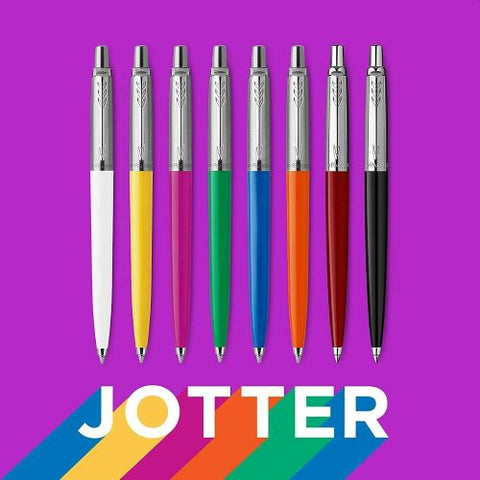
Parker Jotter Ball Pens
Bic and the Cristal
Marcel Bich began producing pen holders and pencil cases in a Paris factory before purchasing the ballpoint patent from Laszlo Biro for $2 million. The result was the Bic Cristal, introduced to America in 1950 -- a design that has remained largely unchanged ever since.

Bic Cristal Ball Pen
The Bic Cristal has become the most widely sold pen in the world, selling an average of 57 per second. Since 1950, sales have far surpassed 100 billion. It has a permanent display in New York's Museum of Modern Art. The hole in the iconic cap, incidentally, is a safety feature in case it is accidentally swallowed.
The Environmental Question
The ballpoint pen's ease of use and accessibility have made it an extraordinary commercial success. But most cheap ballpoints are discarded once the ink runs out, and the vast majority end up in landfill. Today, many manufacturers are responding by promoting refillable designs and using recycled or more sustainable materials.
It is worth noting that a refillable fountain pen, used with bottled ink, produces a fraction of the plastic waste of a disposable ballpoint -- and offers a considerably more enjoyable writing experience. Browse our fountain pen range if you are curious about making the switch.